
Simple Ways to Track Daily Habit Progress Without Complex Apps Guide
Let’s be honest for a second. How many times have you downloaded the latest productivity app, meticulously configured color-coded categories, set up push notifications, and felt a sudden rush of accomplishment—only to abandon the whole system twelve days later? I’ve lost count of how many times I fell into that exact trap. We confuse setting up a system with actually doing the work. Technology promises frictionless tracking, but usually, it just gives us another notification to swipe away, another password to remember, and a low-grade digital fatigue. If you are tired of staring at glass screens and want to know how to build a routine that actually sticks, you are in the right place. Let’s strip away the noise.

- • Why Digital Habit Trackers Fail Most People
- • The Power of Analog: The Wall Calendar "Don't Break the Chain" Method
- • The Paper Clip Jar: Tactile Feedback That Keeps You Going
- • The Index Card Pocket Notebook Strategy
- • How to Choose the Right Analog Tracker for Your Personality
- ↳ What if I miss a day using a manual habit tracker?
- ↳ Is paper really better than apps for tracking habits?
- ↳ How many habits should I track at once?
- ↳ What do I do when a monthly tracker fills up?
Key Takeaways & Quick Overview
AI Verified
- ✔Simple ways to track daily habit progress without complex apps guide let’s be honest for a second.
- ✔How many times have you downloaded the latest productivity app, meticulously configured color-coded categories, set up push notifications, and felt a sudden rush of accomplishment—only to abandon the whole system twelve days later? i’ve lost count of how many times i fell into that exact trap.
- ✔We confuse setting up a system with actually doing the work.
- ✔Technology promises frictionless tracking, but usually, it just gives us another notification to swipe away, another password to remember, and a low-grade digital fatigue.
Why Digital Habit Trackers Fail Most People
Here is the ugly truth about software-based habit trackers: they are engineered to keep you engaged with the app, not with your actual life. They want your attention. They send reminders. They show you elaborate charts. But according to insights from the BJ Fogg Behavior Model, human action relies heavily on reducing friction. When your habit tracker requires an internet connection, a battery charge, and unlocking your phone—where three social media apps are screaming for your eyeballs—you are fighting an uphill battle against your own biology.
I’ve noticed a pattern among people who successfully maintain lifelong routines. They don’t use complicated dashboards. They use friction-free, analog methods. When you remove the loading screens and the login prompts, tracking becomes almost mindless. And that is exactly where you want it to be. If tracking your habit takes longer than doing the habit itself, the system is fundamentally broken. Period.
The Power of Analog: The Wall Calendar “Don’t Break the Chain” Method
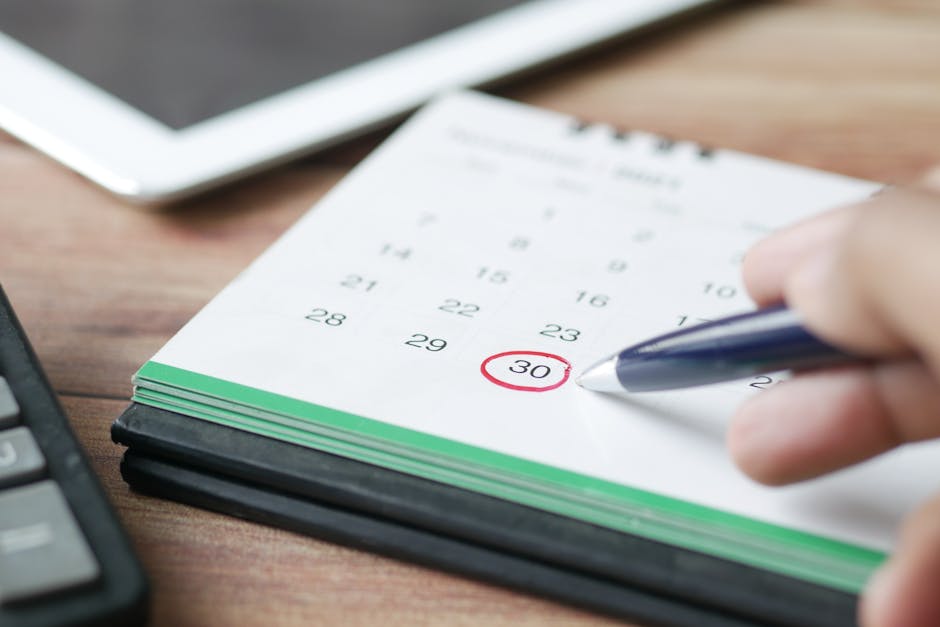
Let’s talk about the absolute simplest way to track your daily progress. It costs about five dollars. Go to the store, buy a cheap wall calendar—the kind with big squares for every day of the month—and a bright red Sharpie. Hang it on the wall where you cannot avoid looking at it. Kitchen, home office, back of the bedroom door. You pick.
Every single day you successfully complete your target habit—whether that is writing 500 words, doing twenty pushups, or reading for fifteen minutes—you put a massive red ‘X’ right across that day. After a few days, you’ll notice a chain forming. Your only job from that point forward is to not break the chain. This simple visual cue leverages psychological principles similar to those found in Atomic Habits research. When you see four days of unbroken progress, your brain naturally wants to protect that streak. It hurts to draw a line through a blank space.
Trust me on this: seeing physical ink on paper hits a completely different part of your brain than watching a little green dot light up on an OLED screen. It feels real. It has weight.
The Paper Clip Jar: Tactile Feedback That Keeps You Going
If wall calendars aren’t your style, let’s look at another brilliantly low-tech approach: the double-jar method, often adapted from financial and productivity circles. You take two mason jars and a box of standard paper clips. Label one jar “To Do” and the other jar “Done.” Fill the “To Do” jar with fifty paper clips.
Every time you finish a habit unit—say, completing a focused 30-minute block of work—you physically pick up a paper clip and drop it into the “Done” jar. The sound it makes—that metallic clink against the glass—provides an instant auditory and tactile reward. Stanford habit formation studies consistently point out that immediate reinforcement is the secret sauce of habit loops. By moving that physical object, you are telling your brain: We did the thing. We earned the reward.
The Index Card Pocket Notebook Strategy
Carrying a bulky planner around is annoying. Phones are convenient, but they distract us. The middle ground? A cheap 3×5 index card or a pocket-sized cahier notebook that fits right next to your wallet or keys.
Draw a simple grid on the back of the card. Write down three habits vertically across the left side, and put numbers 1 through 31 horizontally across the top. Make a tiny dot or checkmark each day. That’s it. No cloud sync, no subscription fee, no software updates that suddenly rearrange the user interface. It lives in your pocket. It’s entirely private. And when the month ends, you throw it away or stash it in a shoebox. You don’t need a ten-year digital archive of whether you drank enough water on a Tuesday in 2021. You just need to know what you’re doing today.
How to Choose the Right Analog Tracker for Your Personality
Don’t try to adopt all these methods at once. That is just digital app culture creeping into your analog life under a different disguise. Pick one:
- If you are visual and spend a lot of time in one room, get the wall calendar.
- If you need physical, tactile feedback during deep work, use the paper clip jars.
- If you are constantly on the move and need something portable, grab a pocket index card.
Keep your friction ultra-low. The goal isn’t to create a work of art in a bullet journal; the goal is to do the habit, check the box, and get on with your day.
Frequently Asked Questions
What if I miss a day using a manual habit tracker?
Don’t panic and don’t quit. The golden rule of habit tracking is never miss twice. Missing one day is an anomaly; missing two days is the start of a brand new, unwanted habit. Just draw a small dot over the missed day or leave it blank and start a new chain immediately.
Is paper really better than apps for tracking habits?
For most people, yes. Paper eliminates screen distractions, works without electricity, cannot crash, and provides a tactile psychological connection to the task that digital apps simply cannot replicate.
How many habits should I track at once?
Start with no more than two or three core habits. Trying to track ten different metrics every single day turns your simple tracking system into a stressful administrative chore.
What do I do when a monthly tracker fills up?
Review it quickly—notice which days you slipped and why—and then start a fresh sheet. Do not hoard old habit trackers unless you are genuinely doing a long-term personal data experiment.