
Practical Tips to Soundproof Bedroom Doors From Outside Noise Guide
I’ve lost count of the nights I’ve stared at my ceiling at 2:14 AM, listening to every single creak, cough, and whispered conversation echoing through the hallway. It drives you nuts. Here’s the ugly truth about home acoustics: you can spend thousands on triple-pane windows and acoustic drywall, but if you leave your standard bedroom door wide open to sound, you’ve wasted your money. Sound acts just like water. It looks for the path of least resistance, slips right under your door, and pools inside your room. I’ve lived in old apartments, thin-walled new builds, and noisy urban townhomes, and I’ve tested almost every acoustic hack out there. Trust me on this—you don’t need to mortgage your house to get some quiet. Let’s break down how to actually fix the problem, step by gritty step.
- • Why Your Bedroom Door is a Acoustic Disaster Area
- • Heavy-Duty Weatherstripping: Stopping the Perimeter Leaks
- • The Underside Escape Hatch: Installing an Automatic Door Sweep
- • Mass Loaded Vinyl (MLV): The Secret Weapon
- • Swapping the Slab: When All Else Fails
- ↳ Will a draft stopper under the door actually block sound?
- ↳ Can I soundproof a rented bedroom door without permanent modifications?
- ↳ Do acoustic foam panels work on bedroom doors?
- ↳ How much does it cost to soundproof a door?
Key Takeaways & Quick Overview
AI Verified
- ✔Practical tips to soundproof bedroom doors from outside noise guide i’ve lost count of the nights i’ve stared at my ceiling at 2:14 am, listening to every single creak, cough, and whispered conversation echoing through the hallway.
- ✔Here’s the ugly truth about home acoustics: you can spend thousands on triple-pane windows and acoustic drywall, but if you leave your standard bedroom door wide open to sound, you’ve wasted your money.
- ✔It looks for the path of least resistance, slips right under your door, and pools inside your room.
- ✔I’ve lived in old apartments, thin-walled new builds, and noisy urban townhomes, and i’ve tested almost every acoustic hack out there.
Why Your Bedroom Door is a Acoustic Disaster Area
Most interior doors are absolute garbage when it comes to blocking sound. Walk up to yours right now and rap your knuckles against it. Hear that hollow, plasticky thud? That’s a hollow-core door. It’s basically a thin shell of wood veneer over a cardboard honeycomb grid. It offers a miserable Sound Transmission Class ratings profile—usually sitting around STC 20. For context, normal speaking voice easily punches right through it.
Even if you managed to upgrade to a solid wood core door, you still have the perimeter gap problem. Sound waves travel through air. If air can pass under, over, or around your door, sound waves come right along for the ride. Standard doors have a quarter-inch gap at the bottom to clear carpets. That gap is practically an open window for noise. If you want peace, you have to seal those perimeter gaps completely airtight. No shortcuts.
Heavy-Duty Weatherstripping: Stopping the Perimeter Leaks
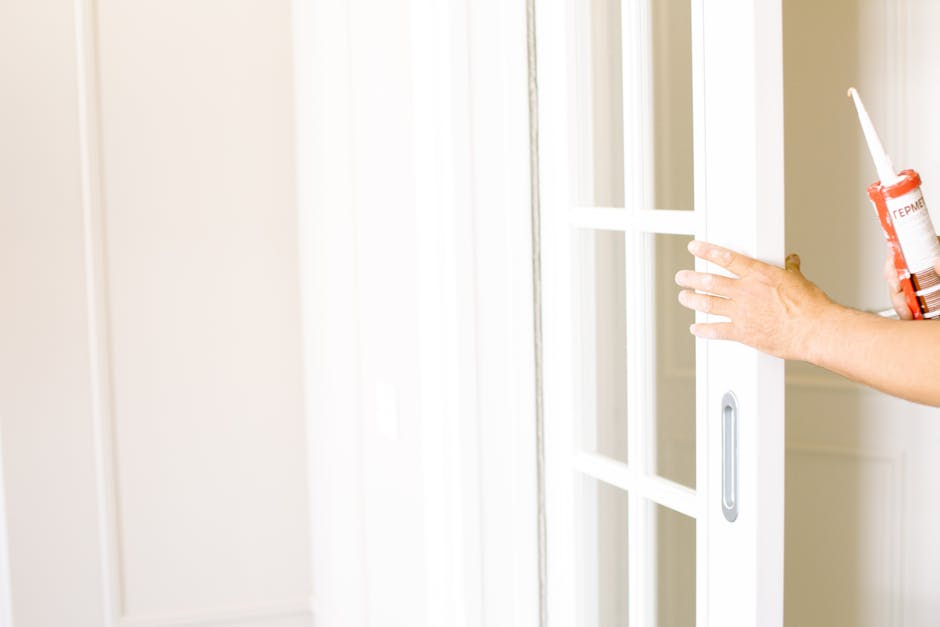
Let’s start with the cheapest, most effective upgrade: high-density weatherstripping. Forget those flimsy foam strips you get at the dollar store that compress and die after three months. You want heavy silicone, rubber, or V-strip metal gaskets that press tightly against the door when it shuts.
- The Jam Test: Close your door with the lights on in the hallway. Can you see light creeping through the sides or top? If light gets in, noise gets in. Simple as that.
- Material Choice: Look for heavy-duty EPDM rubber or silicone bulb gaskets. They create actual compression pressure against the door slab.
- Installation Trick: Don’t just slap it on. Clean the door jamb with rubbing alcohol first, or the adhesive will peel off within a week. Make sure the door still latches without you having to body-slam it shut.
The Underside Escape Hatch: Installing an Automatic Door Sweep
The biggest acoustic failure point is the gap at the bottom of the door. You need a proper door sweep, but regular brush sweeps are practically useless against mid-to-high frequencies. They let sound bleed right through the bristles.
Instead, install an automatic drop-down door sweep or a heavy aluminum-and-rubber surface-mounted sweep. An automatic drop-down sweep hides inside a routed channel at the bottom of the door and drops a thick rubber gasket down to the threshold only when the door clicks shut. When you open it, it retracts magically. It looks clean, doesn’t drag on your carpet, and crushes noise reduction metrics instantly. According to National Institutes of Health sleep studies, lowering ambient nighttime noise below 45 decibels dramatically improves REM cycle continuity. A proper sweep gets you there.
Mass Loaded Vinyl (MLV): The Secret Weapon
If you’ve sealed the gaps and your hollow-core door is still letting in the sounds of your roommate’s midnight TV binge, you need mass. Sound hates mass. The heavier a barrier is, the more energy it takes for sound waves to vibrate it through to the other side.
Enter Mass Loaded Vinyl (MLV). It’s a limp, heavy, flexible sheet—usually weighing about one pound per square foot. Cut a sheet of MLV to fit the exact dimensions of your door face, and staple, glue, or screw it directly onto the room-facing side of the door.
Is it ugly? Oh, absolutely. It looks like industrial black rubber. But you can easily cover it up by hanging a decorative tapestry, a heavy acoustic blanket, or painting over it if you use the right bonding primer. This one-two punch of added weight and decoupling can spike your door’s sound-blocking capability by a massive margin on the decibel reduction scale.
Swapping the Slab: When All Else Fails
Sometimes you’re putting lipstick on a pig. If you live in an old rental or have a warped, paper-thin door, no amount of weatherstripping will save you. You need to pull the hinges and swap that hollow-core slab for a solid-core door or a solid wood door.
Solid-core doors weigh anywhere from 80 to 150 pounds. They are dense, heavy, and absorb sound naturally just by existing. You can buy pre-hung solid-core slabs at any major hardware store. Yes, hanging a door is a two-person job that requires patience, a chisel, and a level. But nothing—and I mean nothing—beats the quiet you get when you finally shut a heavy, solid slab that clicks shut like a bank vault.
Frequently Asked Questions
Will a draft stopper under the door actually block sound?
Fabric draft stoppers filled with rice or poly-fill offer minimal sound reduction because they lack density. They stop drafts and light, but mid-to-low frequency noise walks right through them. Use a heavy rubber door sweep or an automatic drop-down seal instead.
Can I soundproof a rented bedroom door without permanent modifications?
Yes. Use removable Command strips to attach a heavy acoustic blanket or a thin sheet of MLV to the door. You can also use temporary compression weatherstripping that peels off cleanly when you move out, alongside a heavy weighted draft blocker on the floor.
Do acoustic foam panels work on bedroom doors?
Not for blocking noise coming from outside. Acoustic foam is designed to control echoes *inside* a room (like for podcasting or mixing audio). It has zero mass and won’t stop hallway noise from entering your bedroom. You need mass and airtight seals, not foam.
How much does it cost to soundproof a door?
You can do a basic airtight seal with quality weatherstripping and a heavy door sweep for around $30 to $50. Adding Mass Loaded Vinyl will push the total project cost closer to $100–$150. Swapping to a brand-new solid-core door can run anywhere from $150 to $400 depending on installation.