
I’ve lost count of how many homes I’ve investigated where people brag about installing low-flow showerheads, yet they completely ignore the two water-guzzling monsters sitting right in their kitchen and utility room. Here’s the ugly truth: your daily dishwashing and laundry routines are likely draining hundreds of gallons of water every single week without you even realizing it. We treat municipal water like an infinite resource, turning on faucets while scrubbing pots or running half-empty washing loads just because we’re in a rush. Trust me on this—changing a few invisible habits in your daily chores will slash your utility bill faster than replacing your bathroom fixtures. Let’s dive into the granular mechanics of how your kitchen and laundry room actually consume water, and more importantly, how you can stop the waste starting today.
- • The Great Dishwashing Debate: Hand Washing vs. Modern Appliances
- • Revolutionizing Your Laundry Routine Without Sacrificing Cleanliness
- ↳ Mastering Load Sizes and Water Levels
- • Advanced Tactics for the Dedicated Conservationist
- ↳ Is it really more water-efficient to use a dishwasher than washing by hand?
- ↳ Should I run smaller laundry loads to keep clothes cleaner?
- ↳ Do eco-cycles on washing machines actually save water?
- ↳ How can I pre-treat tough stains without wasting gallons of water?
Key Takeaways & Quick Overview
AI Verified
- ✔I’ve lost count of how many homes i’ve investigated where people brag about installing low-flow showerheads, yet they completely ignore the two water-guzzling monsters sitting right in their kitchen and utility room.
- ✔Here’s the ugly truth: your daily dishwashing and laundry routines are likely draining hundreds of gallons of water every single week without you even realizing it.
- ✔We treat municipal water like an infinite resource, turning on faucets while scrubbing pots or running half-empty washing loads just because we’re in a rush.
- ✔Trust me on this—changing a few invisible habits in your daily chores will slash your utility bill faster than replacing your bathroom fixtures.
The Great Dishwashing Debate: Hand Washing vs. Modern Appliances
For decades, well-meaning parents taught us that scrubbing dishes by hand under a running faucet is the ultimate act of household thriftiness. They were wrong. Completely, undeniably wrong. According to data from the EPA WaterSense program, standard kitchen faucets run at about 2.2 gallons of water per minute. If you leave the tap trickling for ten minutes while scraping, soaking, and rinsing dinner plates, you’ve just dumped 22 gallons of water down the drain for a single meal.
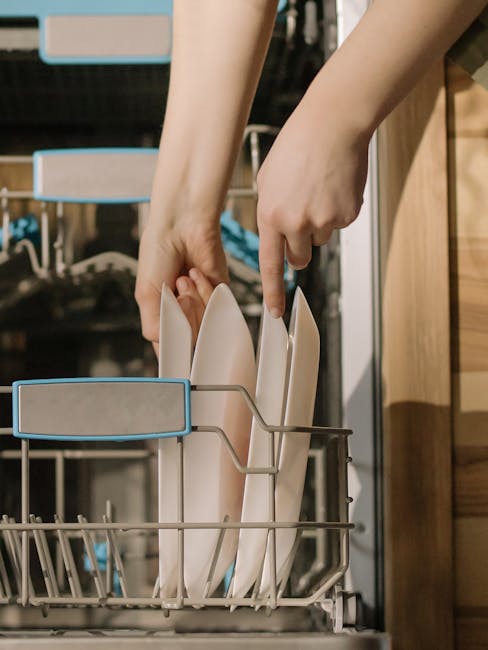
A modern, ENERGY STAR-certified dishwasher? It uses roughly 3 to 5 gallons per cycle. Do the math. Hand washing dishes under a running tap for just five minutes uses more water than running an entire, fully loaded modern dishwasher. Now, if you inherited a dishwasher from the 1990s that sounds like a jet engine taking off, that’s a different story. But if your machine is less than a decade old, stop scrubbing in the sink.
However, simply owning a dishwasher isn’t a free pass. Most people mess up the execution. Here is how you actually optimize it:
- Never pre-rinse under running water. Scrape food scraps straight into the trash or compost bin. Modern enzyme-based detergents actually need some food particles to cling to; otherwise, the chemicals can etch your glassware.
- Run full loads only. A half-empty dishwasher uses the exact same amount of water and energy as a packed one. Wait until every rack is utilized.
- Skip the heated dry. While this saves electricity rather than water directly, opening the door at the end of the cycle lets air-drying do the work, reducing overall resource strain.
Revolutionizing Your Laundry Routine Without Sacrificing Cleanliness
Let’s walk down the hall to the laundry room. This is where hidden water waste goes on a rampage. Older top-loading washing machines with a center agitator are notorious water hogs. They can easily consume up to 40 or even 45 gallons of water per single load. Multiply that by four or five loads a week, and you’re looking at a staggering volume of water vanishing into the sewer.
If you’re stuck with an older top-loader, your strategy has to be ruthless efficiency. But if you are in a position to upgrade, your absolute best move is investing in a front-load washer. Front-loaders tumble clothes through a shallow pool of water rather than submerging them entirely, dropping consumption down to 15 to 20 gallons per load. When you reference USGS water usage statistics, the cumulative impact of these small appliance efficiencies becomes impossible to ignore.

Beyond hardware upgrades, your daily habits dictate your conservation success. People constantly wash clothes that aren’t actually dirty. Wore a sweater for two hours to sit in an air-conditioned office? It doesn’t need a full heavy-duty cycle. Air it out.
Mastering Load Sizes and Water Levels
We’ve all been guilty of tossing a single pair of jeans and a t-shirt into a massive washing drum because we “needed that specific outfit.” Resist the urge. Consolidating laundry loads is the single most effective habit you can build. Wait until you have a true full load—meaning the drum is packed loosely to about 80% capacity—before hitting start. If your machine features manual water-level settings, never default to the “large load” option for a medium pile. It’s an easy fix that prevents dozens of gallons from being wasted every week.
Temperature matters, too. While cold water washing is primarily championed for energy savings, it protects the longevity of your fabrics, meaning you replace clothes less often. Manufacturing new clothing consumes thousands of gallons of water, so making your wardrobe last longer is a sneaky, brilliant form of indirect water conservation.
Advanced Tactics for the Dedicated Conservationist
If you want to take your water-saving game to the absolute professional level, you need to look at greywater diversion. While modifying your home’s plumbing requires permits and professional installation, capturing your washer’s rinse cycle water or routing sink runoff to irrigate non-edible landscaping is entirely doable.
Start smaller. Keep a bucket near your kitchen sink while waiting for the hot water to travel from your water heater. Pour that captured clean water into your washing machine or use it to water houseplants. It takes ten seconds of discipline, but those gallons add up over a month.
Stop ignoring the small leaks. A dripping kitchen faucet losing one drip per second wastes over 3,000 gallons of water a year. That’s enough water for more than 180 showers. Grab a wrench, replace the washer or cartridge, and stop letting your plumbing bleed out.
Frequently Asked Questions
Is it really more water-efficient to use a dishwasher than washing by hand?
Yes. A standard modern dishwasher uses about 3 to 5 gallons per cycle. Washing the equivalent load of dishes by hand under a running tap can easily consume 20 gallons or more.
Should I run smaller laundry loads to keep clothes cleaner?
No. Overloading a machine is bad, but under-loading wastes massive amounts of water and energy. Always aim for a balanced, full load where clothes can tumble freely without being crammed.
Do eco-cycles on washing machines actually save water?
Most eco-cycles modify water temperature and tumbling duration, but they primarily save energy. However, specialized eco-modes on modern front-loaders do optimize water usage by tailoring intake to the weight of the laundry load.
How can I pre-treat tough stains without wasting gallons of water?
Instead of running the faucet over a stained shirt, apply a targeted stain remover or a paste of baking soda and water directly to the fabric. Let it sit for 15 minutes, then toss it straight into the washing machine.