
How to Protect Outdoor Patio Furniture From Sun and Rain Damage Guide
I’ve lost count of how many high-end teak tables and cast-aluminum loungers I’ve watched turn to absolute dust because people think outdoor furniture is invincible. It isn’t. Rain, humidity, and brutal ultraviolet rays form a tag-team of destruction that works around the clock. You drop a grand or two on a gorgeous patio setup, leave it completely naked to the elements, and wonder why it looks like a yard sale reject two summers later. Here’s the ugly truth: nature doesn’t care about your warranty. If you want your investment to survive more than a couple of seasons, you need a system. Let’s break down how to actually stop the rot, banish the rust, and keep your patio looking sharp.
- • The Physics of Patio Destruction: Sun vs. Rain
- • Material-Specific Armor: Treating Wood, Metal, and Wicker
- • The Art of Choosing and Using Patio Covers
- • Off-Season Storage Strategies That Actually Work
- ↳ Should I bring my patio furniture inside during heavy rainstorms?
- ↳ Can I use car wax on metal patio furniture?
- ↳ How do I remove mold and mildew from outdoor fabrics safely?
- ↳ How often should I reapply weatherproofing sealants to wood?
Key Takeaways & Quick Overview
AI Verified
- ✔How to protect outdoor patio furniture from sun and rain damage guide i’ve lost count of how many high-end teak tables and cast-aluminum loungers i’ve watched turn to absolute dust because people think outdoor furniture is invincible.
- ✔Rain, humidity, and brutal ultraviolet rays form a tag-team of destruction that works around the clock.
- ✔You drop a grand or two on a gorgeous patio setup, leave it completely naked to the elements, and wonder why it looks like a yard sale reject two summers later.
- ✔Here’s the ugly truth: nature doesn’t care about your warranty.
The Physics of Patio Destruction: Sun vs. Rain
Most folks think rain is the ultimate enemy. They panic at the first hint of a drizzle. But honestly? The sun is the silent assassin. Ultraviolet rays break down the molecular bonds in wood fibers, snap the elastic threads in synthetic wicker, and turn vibrant fabrics into chalky ghosts. According to UV radiation studies, constant solar exposure accelerates polymer degradation faster than almost any other environmental factor. When you combine that relentless baking with sudden downpours—which force moisture deep into pores before instantly trapping it under a hot afternoon sun—you get a masterclass in material fatigue.
Wood swells and splits. Metal oxidizes and blooms into crusty orange rust. Plastic and resin turn brittle, snapping under the weight of a sitting guest. You cannot fight this physics experiment with wishful thinking. You need targeted defense mechanisms for every specific material sitting on your deck.
Material-Specific Armor: Treating Wood, Metal, and Wicker
Treating every piece of furniture the same way is a rookie mistake. What saves a powder-coated aluminum frame will completely ruin a natural teak bench. Let’s look at what actually works.
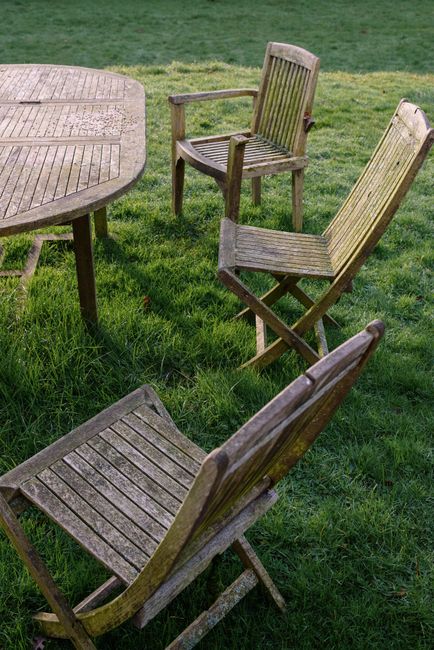
Teak and Hardwoods: Leave teak alone and it turns a stately silvery-gray. Some people love that look. But if you want to keep the honey-brown richness, you have to oil it. Not just any random motor oil or cooking grease—use a marine-grade teak sealer with UV inhibitors. For general wood preservation guidelines, applying a penetrating oil twice a year keeps moisture from penetrating the grain and stops mold spores from setting up camp.
Wrought Iron and Aluminum: Rust is an oxygen-and-water party. If you spot a scratch on a metal frame, hit it immediately with touch-up paint or a clear coat of rust-inhibiting enamel. Don’t wait. Rust spreads underneath the surface finish like a disease, bubbling up when you least expect it.

The Art of Choosing and Using Patio Covers
Buying a cover sounds simple. Walk into a big-box store, grab a tarp, slap it over the table, and call it a day. Wrong. Cheap plastic tarps trap condensation underneath them like a greenhouse. That trapped moisture has nowhere to go, meaning your furniture is basically stewing in its own sweat all autumn long.
Trust me on this: buy marine-grade, breathable polyester or solution-dyed canvas covers with built-in air vents. Look for drawstrings and buckle straps that lock the cover securely to the furniture legs. If your cover is too loose, winter winds will turn it into a giant parachute, whipping the fabric against your furniture corners and stripping away the finish.
- Measure twice: A cover that drags on the ground wicks up ground moisture. A cover that’s too tight won’t go on at all.
- Elevate the center: Place a small ball or upturned bucket underneath the middle of the cover to create a tent effect. This ensures rain and melting snow slide off instead of pooling in a heavy, sagging puddle.
- Clean before covering: Never wrap a dirty, damp chair in a cover. Trapped dirt acts like sandpaper when the wind blows the cover around.
Off-Season Storage Strategies That Actually Work
When freezing temperatures roll in, outdoor living stops. That’s your cue to execute a proper off-season game plan. Cushions are the absolute worst victims of winter neglect. Foam acts like a giant sponge; if it absorbs freezing water, the internal cell structure shatters, leaving you with lumpy, ruined cushions by spring.
Strip all cushions, throws, and umbrellas off the frames. Clean them thoroughly according to the manufacturer’s tags, let them dry completely—I mean bone-dry—and store them indoors. A climate-controlled garage or basement is ideal. If space is tight, vacuum-seal bags work wonders for thin cushions, though high-density foam should never be compressed for months on end.
As for the frames, stackable chairs should be nested with protective felt pads between them to prevent scratching. If you have heavy stone-top tables, get them off the frozen ground. Slide rubber shims or blocks under the legs so rising frost doesn’t crack the stone or warp the frame.
Frequently Asked Questions
Should I bring my patio furniture inside during heavy rainstorms?
For a standard afternoon thunderstorm? No, that’s overkill if your furniture is properly treated or covered. However, if you’re facing severe tropical storms, hurricanes, or continuous multi-day downpours, moving lightweight pieces into a garage or shed prevents them from becoming dangerous projectiles and minimizes prolonged moisture exposure.
Can I use car wax on metal patio furniture?
Absolutely. Applying a thin coat of non-abrasive paste car wax to aluminum and wrought iron furniture provides an extra hydrophobic barrier against rain and pollutants. It repels water instantly and gives powder-coated finishes a stunning, deep sheen.
How do I remove mold and mildew from outdoor fabrics safely?
Skip the harsh bleach if your fabric has UV-protective coatings. Instead, mix a solution of one cup of mild dish soap and a gallon of warm water. Scrub gently with a soft-bristled brush, let it sit for ten minutes, and rinse thoroughly. For stubborn mold, a cup of white vinegar mixed with water usually does the trick without destroying the textile fibers.
How often should I reapply weatherproofing sealants to wood?
It depends entirely on your local climate. If you live in an area with brutal summers and heavy winter snow, you’ll need to clean and reseal wood furniture once a year—usually in late autumn before the freeze sets in. Milder climates can often stretch this to every 18 to 24 months.